
Uncategorized
A World of Mushroom Spores
Sep
What are Mushroom Spores?
Introduction
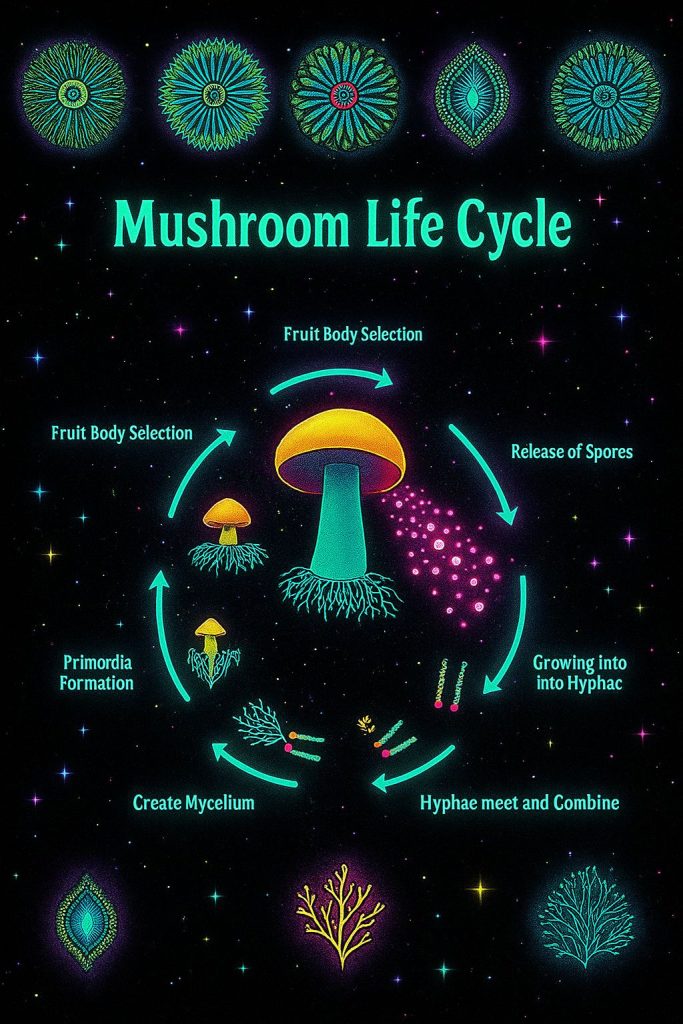
Mushrooms are not only a tasty and versatile ingredient in cooking, but they also have a captivating life cycle. Their life cycle begins with spores, which are tiny reproductive cells that are released from the underside of the mushroom cap. These spores are then carried by the wind or other means to new locations where they have the potential to grow into new mushrooms.
Once a spore lands in a suitable environment, it begins to germinate forming a thread-like network called mycelium. Because the mycelium grows and spreads underground, absorbing nutrients and breaking down organic matter. This network of mycelium is often referred to as the “root” system of the mushroom.
Have you ever flipped over a rock, or piece of wood and discovered tiny white strands? This is mushroom mycelium.
After a period of growth, the mycelium forms tight little knots called hyphae. The hyphae grow to create the familiar mushroom cap and stem. The cap of the mushroom is where the spores are produced, completing the life cycle of the mushroom.
When the spores are mature, they are released into the environment to begin the cycle anew. This is true for all mushrooms including magic mushrooms like Psilocybe Cubensis other magic fungi. Magic mushroom spores are no different, then gourmet oyster mushrooms when it come to life cycle.
The life cycle of mushrooms is both complex and fascinating. It demonstrates the beauty of nature and emphasizes the crucial role of fungi in ecosystems.
Understanding Mushroom Spores
What are Mushroom Spores?
- Tiny reproductive cells, mostly microscopic and not visible to the naked eye.
- Produced by fungi
- Dispersed to create new fungi
Importance of Mushroom Spores
- Essential for the survival of fungi
- Play a crucial role in ecosystem diversity
- Used in various scientific studies
Germination of Mushroom Spores
Conditions for Germination
- Moist environment
- Suitable temperature
- Nutrient-rich substrate, such as rye grain or the Pf Tek when applying to cultivation of mushroom species
Process of Germination
- Spores absorb water
- Mycelium emerges from spores
- Hyphae grow from mycelium and form Mushroom fruiting bodies
The Role of Mush Spores in Nature
Spore Dispersal Methods
- Wind dispersal
- Animal dispersal
- Water dispersal
Contribution to the earth.
- Fungal spores contribute to soil health
Fungi provide nutrients to plants, this is know as Mycorrhizal fungi. These mycelium structures work with plants to establish a mild form of a parasite that is mutually benficial. This means both the plant and the fungus benefit from the association. The fungi helps the plant bring in more nutrients.
Various species rely on fungi for survival. This includes many insects such as bees, which play such an important role in our eco system.
Conclusion
Mushroom spores are incredibly small and often overlooked, but they play a crucial role in the world of fungi. These spores are the reproductive cells of mushrooms, allowing them to spread and reproduce in various environments. When a mushroom drops its spores, they are carried by the wind or other means to new locations. This is where the mush spores can grow into new fungi.
Mush spores are essential for all fungi, as they allow for genetic diversity and adaptation to different environmental conditions. Without spores, fungi would not be able to reproduce and survive in the vast array of ecosystems they inhabit. In this way, spores are key players in maintaining the health and balance of ecosystems around the world.
Furthermore, spores have also been found to have unique properties that can benefit human health. Some spores have been studied for their potential medicinal properties, including anti-inflammatory and immune-boosting effects. Research into the therapeutic potential of mushroom spores is ongoing, and they may hold promise for future medical treatments.
Overall, mushroom spores are not just tiny cells, but complex and important components of the natural world. By learning about mushroom spores and their role, we can gain a deeper appreciation of the life that surrounds us.
