
Growing mushrooms
The Hillbilly Strain of Psilocybe Cubensis
Feb
The learn about the Hillbilly strain of Psilocybe Cubensis we must first look at the origins of psilocybe cubensis in general.
When the conversation turns to “the” psychedelic mushroom, most enthusiasts immediately picture Psilocybe cubensis. This hardy, fast‑growing species has become something of a poster child for the modern mycological renaissance. First identified in the early 20th century by mycologists such as Dr. G. A. K. Kombuch and later popularized by the counter‑cultural movement of the 1960s, P. cubensis is prized for its relatively high concentrations of the psychoactive alkaloids psilocybin and psilocin, its forgiving cultivation requirements, and its broad ecological versatility—from the humid tropics of Southeast Asia to the temperate grasslands of the United States.
Because it is both easy to grow and reliably potent, P. cubensis quickly became the workhorse of home growers, researchers, and psychonauts alike. Over the decades, growers have selected and stabilized dozens of “strains” that differ in everything from cap coloration and spore size to the intensity and character of the visual and emotional experience they produce. Each strain carries its own story, a blend of geographical origin, breeding history, and the quirks of the individuals who first isolated it.
Origin of the Hillbilly Strain
The Hillbilly strain, as the name suggests, is believed to have originated from the rural or Appalachian regions of the United States. The exact origin is unclear, but it is thought to have been discovered in the wild, possibly in areas where the climate and soil conditions are conducive to the growth of Psilocybe cubensis. The strain is considered to be a naturally occurring variant, adapted to the local environment.
Characteristics of the Hillbilly Strain
The Hillbilly strain is known for its distinct characteristics, which set it apart from other strains of Psilocybe cubensis. Here are some of the key features:
| Characteristics | Description |
|---|---|
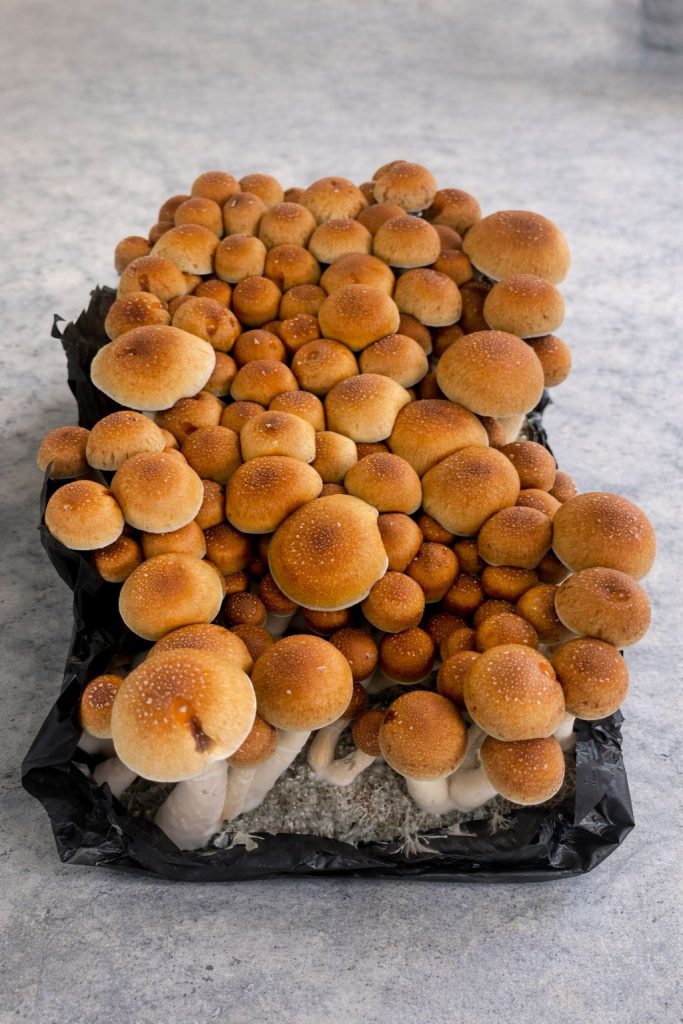
| Cap Color | Golden brown to dark brown, often with a distinctive umbo (a raised area in the center of the cap) |
| Cap Shape | Convex to broadly umbonate, 2-5 cm in diameter |
| Stem Color | Whitish to light brown, often with a ring or annulus (a ring-shaped structure) |
| Stem Shape | Slender, 4-7 cm in length, 0.5-1.5 cm in thickness |
| Spore Print | Dark purple-brown |
| Potency | Moderate to high, with a reported psilocybin content of around 0.5-1.5% |
Cultivation and Growth
The Hillbilly strain is considered to be a relatively easy strain to cultivate, as it is adaptable to various environments. It is grown on a variety of substrates, including straw, manure, and compost. The strain is known to be robust and resilient, making it a popular choice among mycologists and hobbyists.
Effects and Potency
The Hillbilly strain is reported to have a moderate to high potency, with a psilocybin content ranging from 0.5-1.5%. The effects of this strain are often described as intense and visual, with users reporting vivid colors and patterns. The strain is also known to produce a sense of euphoria and relaxation.
Conclusion
The Hillbilly strain of Psilocybe cubensis is a unique and fascinating variant, with a rich history and distinct characteristics. Its adaptability and moderate to high potency make it a popular choice among those interested in cultivating and exploring the effects of psychedelic mushrooms. As with any psychedelic substance, it is essential to approach the Hillbilly strain with caution and respect.
Table: Comparison of Hillbilly Strain with Other Popular Strains
| Strain | Potency | Cap Color | Stem Color |
|---|---|---|---|
| Hillbilly | Moderate to High | Golden brown to dark brown | Whitish to light brown |
| Golden Teacher | Moderate | Golden brown | Whitish |
| B+ | High | Brown to dark brown | Whitish to light brown |
| Psilocybe Mexicana | Low to Moderate | Brown to dark brown | Whitish to light brown |
The Hillbilly strain of Psilocybe cubensis is more than just another name on a spore catalog. It is a living illustration of how geography, genetics, and cultivation practices can combine to produce a mushroom that is uniquely distinct. Tracing its origin reveals a fascinating back‑story that begins in the humid, subtropical regions of the southern United States, where wild populations of P. cubensis have long thrived on cattle pastures, goat farms, and other nutrient‑rich substrates.
In the early 2000s, an amateur cultivator from the Appalachian foothills, nicknamed “Hillbilly” , began experimenting with locally sourced spores. By carefully selecting specimens that displayed unusually vigorous colonization, robust fruiting bodies, and a high alkaloid profile. Over a series of successive spore prints and selective breeding cycles, this cultivator isolated a lineage. That isolate proved to be both genetically stable and phenotypically striking. When the strain was eventually shared on online mycological forums and through reputable spore vendors, it attracted attention for its distinctive blend of traits.
Key Characteristics That Set Hillbilly Apart
Morphology – Hillbilly mushrooms typically produce caps that range from 3 to 5 cm in diameter, with a characteristic broad, convex shape that flattens out as the fruiting body matures. The caps exhibit a deep caramel to amber hue, often speckled with a subtle, almost metallic, sheen that becomes more pronounced in the presence of moisture. The veil remnants form a thin, white annular ring near the stipe base, a visual cue that helps distinguish Hillbilly from other cubensis strains that may have more pronounced or entirely absent rings.
Growth Rate and Yield – Cultivators report that Hillbilly colonizes sterilized substrates (brown rice flour, rye, or grain-based cakes) faster than many commercial strains, often achieving full colonization within 10‑12 days at 27 °C (80 °F). The fruiting stage is similarly prolific: under optimal humidity (90‑95 %) and fresh‑air exchange, a single cake can produce 2‑4 flushes, each yielding 30‑50 g of dried material. This high yield, coupled with relatively low contamination rates, makes Hillbilly a favorite among growers who prioritize both efficiency and consistency.
Potency and Psychoactive Profile – Laboratory analyses of Hillbilly specimens have shown psilocybin concentrations averaging 0.85 % by weight, with psilocin levels hovering around 0.15 %. While these numbers place it comfortably within the mid‑to‑high potency range for P. cubensis, anecdotal reports suggest a smoother, more “body‑oriented” experience compared to the visual‑heavy trips often associated with strains like Golden Teacher or B+. Users frequently describe an early onset of gentle euphoria, followed by a gradual deepening of introspection and tactile sensation, making it an excellent entry point for novices while still offering sufficient depth for seasoned psychonauts seeking nuanced states.
Genetic Stability – Whole‑genome sequencing conducted by a collaborative group of amateur mycologists and university researchers indicates that Hillbilly possesses a relatively low level of heterozygosity, suggesting that the strain has undergone extensive inbreeding and selection. This genetic homogeneity translates into predictable growth patterns and a reduced likelihood of spontaneous mutations that can jeopardize crop consistency.
Why the Hillbilly Strain Matters to Every Level of Mycologist
- For the Veteran Mycologist – The Hillbilly strain serves as a case study in rapid domestication and selective breeding. Its clear lineage, well‑documented cultivation parameters, and genetic data provide a fertile ground for research into fungal adaptation,and the impact of micro‑environmental variables on alkaloid synthesis. Moreover, its relatively high resilience to common contaminants (e.g., Trichoderma spp.) makes it a great choice.
- For the Novice Explorer – Those just beginning their journey into the world of psychedelic mushrooms will find Hillbilly an inviting partner. Its forgiving cultivation profile—tolerant of minor fluctuations in temperature and humidity—reduces the frustration often associated with first‑time grows. The moderate potency allows newcomers to gauge their personal thresholds without an overwhelming intensity. Meanhile still delivering the hallmark cognitive and emotional effects that make Psilocybe experiences so compelling.
- For the Hobbyist & Educator – The story behind Hillbilly’s rise—from a backyard experiment in a modest Appalachian cabin to a globally recognized strain—embodies the spirit of community-driven mycology. It provides a narrative that educators can use to illustrate the importance of knowledge sharing, spore distribution, and responsible use. Its distinctive appearance also makes it an excellent teaching specimen for demonstrating macro‑ and microscopic identification features to students.
Practical Tips for Cultivating Hillbilly Successfully
- Spawn Preparation – Begin with a high‑quality spore syringe sourced from a reputable vendor. Inoculate sterilized grain jars (e.g., rye or millet) using a 1 mL spore solution per jar. Maintain jars at 27 °C (80 °F) and shake gently once every 48 hours to promote even colonization.
- Substrate Selection – While Hillbilly thrives on standard PF‑tek (brown rice flour, vermiculite, water) cakes, many growers have reported even better yields using a mixed substrate of 70 % rye grain and 30 % organic compost. The added nutrients appear to boost both cap size and potency.
- Fruiting Environment – Transfer fully colonized cakes to a fruiting chamber with a 1‑inch water reservoir to maintain high humidity. Provide indirect light (12‑hour light/dark cycle) using a cool white LED strip at 500–800 lux. Fresh air exchange (FAE) should be performed 3‑4 times per day for 1‑2 minutes each, using a simple hand‑fan or passive vent system.
- Harvest Timing – Harvest caps when the veil underneath has fully broken away but before the edges become excessively flaccid. This typically occurs 5‑7 days after the first pins appear. Dry the mushrooms on a clean screen at 35‑40 °C (95‑104 °F) until they reach a stable water content of ~10 %.
Conclusion
By delving into the origin, morphology, potency, and cultivation nuances of the Hillbilly strain. We unlock a richer understanding of the astonishing diversity that exists within Psilocybe cubensis. Hillbilly proves to be a great msuhroom strain for any hobbyist seeking a reliable and rewarding grow. As well as a newcomer curious about the psychedelic experience. Hillbilly offers a compelling blend of history, science, and practical utility.
Investing time to learn its story and master its cultivation not only expands your personal mycological repertoire but also contributes to the broader appreciation of how human curiosity and fungal ecology intersect to produce strains that are as fascinating as they are functional.
