
Growing mushrooms
What is Mycelium Overlay in Mushroom Growing?
Jun
Understanding Mycelium Overlay: Causes, Prevention, and Fixes
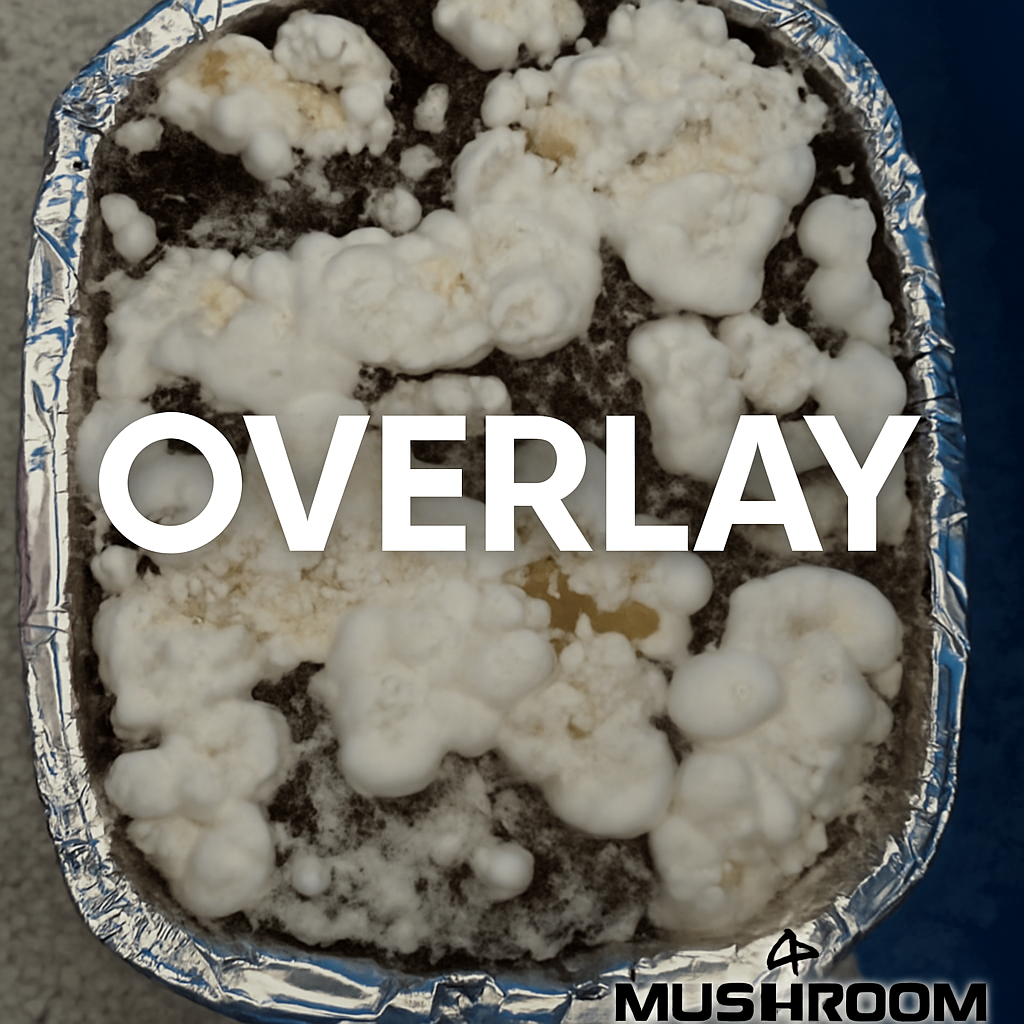
Mycelium overlay in is a condition in mushroom growing that can stop the growth of mushrooms due to mycelium spreading over the casing layer. Of which is typically a moist substrate used to promote mushroom fruiting.
This phenomenon is often a result of prolonged vegetative growth and can signal an over-accumulation of mycelial growth on the casing surface, which can pose challenges for mushroom farmers and hobbyists alike.
Let’s talk about overlay, and examine its characteristics and the specific circumstances that lead to its occurrence. We will also identify the various factors that contribute to overlay, such as environmental conditions, substrate composition, and the timing of casing application.
Furthermore, we will provide practical guidance on how to effectively avoid the onset of overlay during the mushroom cultivation process, including tips on monitoring growth conditions and adjusting environmental variables accordingly.
Lastly, for those who may already be facing issues with overlay, we will share strategies and techniques for mitigating its effects and encouraging healthier fruiting in order to achieve a successful mushroom harvest. Mushroom Prints exploration of overlay will equip you with valuable insights to improve your mushroom-growing practices.
What is Overlay?
Overlay refers to the condition where the mycelium has fully colonized the casing layer, covering its entire surface. While mycelium growth is essential for mushroom production, excessive growth can lead to overlay, negatively impacting mushroom yield and quality.
What Causes Overlay?
Overlay is primarily caused by prolonged vegetative growth, which can be triggered by several factors, including:
- Inadequate environmental controls, such as incorrect temperature, humidity, or CO2 levels
- Insufficient light exposure
- Inadequate casing layer maintenance
- Poor air exchange
- Strain: Psilocybe Natalensis overlay for example is common.
When mycelium is allowed to grow unchecked, it can continue to colonize the casing layer, leading to overlay.
How to Avoid Overlay in Your Casing Layer
To prevent overlay, mushroom growers can take several steps:
- Maintain optimal environmental conditions: Ensure that temperature, humidity, and CO2 levels are within the optimal range for mushroom production.
- Provide adequate light exposure: Most mushroom species require some light to induce fruiting. Ensure that the casing layer receives sufficient light.
- Monitor and maintain the casing layer: Regularly inspect the casing layer and remove any excess mycelium or debris.
- Ensure good air exchange: Adequate air exchange helps to prevent the buildup of CO2 and maintain a healthy environment.
Some additional tips to avoid overlay include:
- Maintaining a consistent temperature between 55-60°F (13-15°C) Depending on the kind of mushroom.
- Keeping the casing layer moist but not waterlogged
- Avoiding over-colonization of the casing layer
How to Fix Overlay
If overlay has occurred, there are several steps that can be taken to rectify the situation:
- Scratch the casing layer: Gently scratching the casing layer can help to stimulate fruiting and reduce mycelium growth.
- Reduce environmental humidity: Lowering the humidity can help to slow down mycelium growth and encourage fruiting.
- Increase air exchange: Improving air exchange can help to remove excess CO2 and promote healthy fruiting.
- Apply a corrective casing layer: In severe cases, applying a new casing layer can help to restart the fruiting process.
Some key actions to take when fixing overlay include:
- Reducing humidity to 80-90%
- Increasing air exchange rates
- Providing supplemental lighting, if necessary
By understanding the causes of overlay and taking steps to prevent and fix it, mushroom growers can optimize their yields and produce high-quality mushrooms.
In the end, overlay is a condition that can have significant impacts on mushroom production. By maintaining optimal environmental conditions, monitoring and maintaining the casing layer, and taking corrective action when necessary, growers can minimize the risk of overlay and achieve healthy, productive mushroom crops.
